
Start with a narrow target, not panic volume
The first month after graduation can feel like a race you already lost because classmates are posting offer photos. Ignore the noise long enough to build a system. Blindly submitting two hundred generic applications burns energy and teaches you little about what employers want.
A focused thirty-day plan beats chaotic volume. You will choose two job titles, turn university work into proof, tailor a small set of applications each week, and rehearse English answers so the first interview is not your first attempt at speaking under pressure.
This roadmap is written for graduates hunting in Saudi Arabia, where English often appears in postings even for local teams, and where internships, volunteering, and graduation projects can carry real weight when written as results.
Why the first thirty days matter in the KSA market
Graduate programmes, operations roles, junior analyst seats, and coordinator positions open in waves. Recruiters skim fast. Candidates who can explain a project in clear English and show a tidy ATS-friendly CV move forward; candidates who only list course names stall.
You do not need a perfect career story. You need a coherent target, evidence of ownership, and enough spoken practice to survive screening calls. Thirty days of deliberate work creates that package.
Treat job search as a part-time job with office hours. Two focused blocks a day beat scrolling openings at midnight with no follow-through.
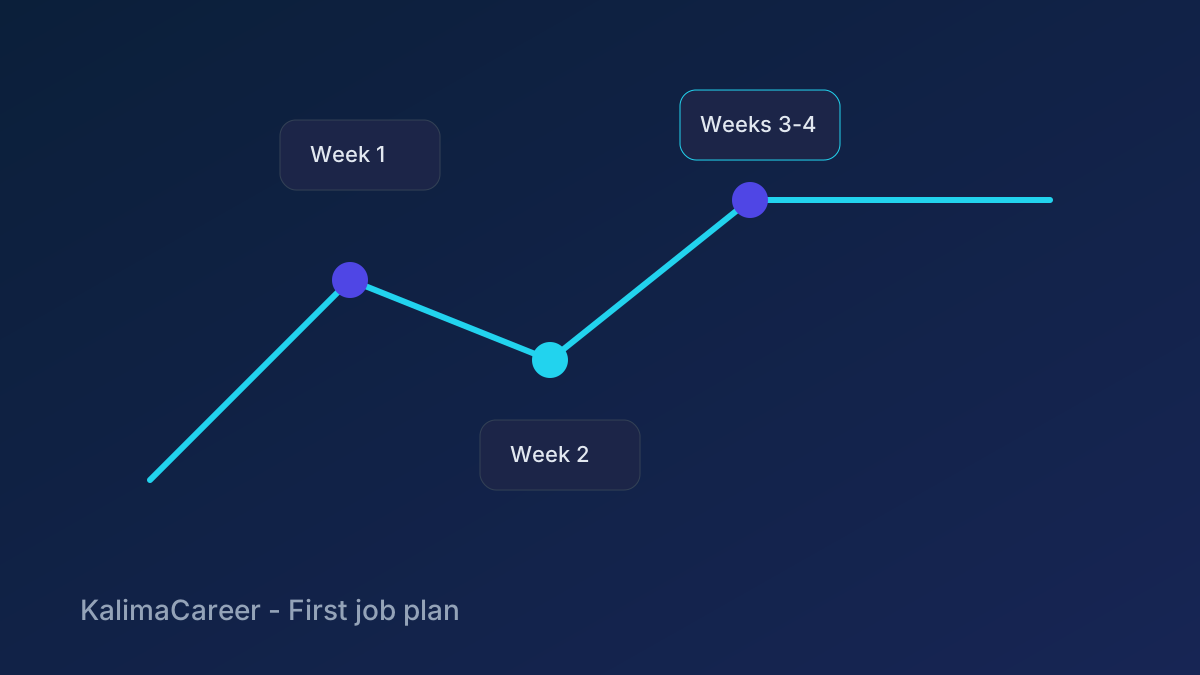
Week 1 — decide the target
Pick two job titles, not ten. Examples: operations coordinator and junior business analyst, or customer success associate and sales support. Read ten real postings for each title and highlight repeated tools, soft requirements, and English expectations.
Write a one-sentence positioning line: I am a finance graduate targeting junior analyst roles where I can use Excel, clear reporting, and stakeholder updates in English. Everything else — CV, LinkedIn, practice — becomes easier once the target is narrow.
List gaps honestly. If every posting asks for Excel dashboards and you only used sheets lightly, schedule three practice tasks this week to produce one portfolio sample. Do not pretend mastery you cannot discuss.
Week 2 — build proof on the page
Turn university projects, internships, volunteering, and part-time work into result bullets. A graduate with three strong bullets beats a long list of course modules. Use verb, method, result. Add tools by name when true.
Build an ATS-safe one-page CV in a single column with plain headings. Mirror language from your target postings where accurate. Create a short LinkedIn About paragraph that matches your positioning line.
Ask a mentor or sharp friend for a thirty-second skim test. If they cannot say what role you want and what proof you have, rewrite before you apply widely.

Weeks 3 and 4 — apply, follow up, and rehearse out loud
Send about ten focused applications a week, each with a CV adjusted to the posting. Track employer, date, version of CV, and next step in a simple sheet. Quality tracking prevents duplicate mistakes and shows patterns in silence versus replies.
In parallel, rehearse English answers for tell me about yourself, a project story, a teamwork story, and why this role. Record yourself twice a week. Practise a calm video-call setup: light, quiet background, water, CV open beside you.
Use referrals and alumni chats as research, not only as favours. Five thoughtful conversations can clarify which title fits you better than fifty random clicks.
Examples of proof graduates overlook
Leading a club budget, tutoring peers, organising a university event, documenting a lab process, or shipping a senior project for a real stakeholder all count when written with outcomes. Employers hire potential plus evidence of ownership.
Language proof matters too. If you studied in English, say so briefly. If you completed an English presentation course or debated in a student society, turn that into a communication bullet rather than hiding it.
Keep a folder of artefacts: slide excerpts, dashboard screenshots with sensitive data removed, and a two-minute project explanation you can give verbally.
Mistakes to avoid in month one
Applying to every title under the sun. Waiting for confidence before practising speech. Sending the same CV everywhere. Ignoring unpaid skill drills that unlock the postings you want. Quitting after one quiet week.
Posting frustration publicly instead of revising materials. Accepting every interview with zero rehearsal. Lying about tools. Those shortcuts create painful interviews and short-lived offers.
Also avoid unpaid busywork that feels productive: redesigning your CV colours five times without improving bullets is decoration, not progress.
Checklist and how KalimaCareer helps
Week 1 target locked. Week 2 proof and ATS CV done. Weeks 3–4 applications tracked and spoken answers rehearsed. Weekly review: what replies did I get, what language did postings share, what story still sounds weak aloud?
KalimaCareer is building career English practice and job-readiness support for Saudi graduates and professionals. Founding members join through a free waitlist with no payment required now. Use the waitlist if you want structured interview speaking practice alongside your thirty-day hunt.
Your classmates' timelines are not your timeline. Thirty deliberate days can move you from empty page to real conversations. Keep the target narrow, the proof concrete, and the English answers out loud.